And now, October. The light changes. The mornings cool. Leaves begin their annual show, and suddenly the year feels further along than seems possible.
There is something about fall that turns our attention not only to change, but to what endures. The people we keep showing up for. The work we return to. The teams we believe in. The places, causes, questions, and communities that have claimed some part of us. |
|
| |
|
A life, perhaps, is measured as much by these commitments as by its accomplishments. What we stay with shapes who we become.
You'll find some of that in this month's Owl: people devoted to ideas and music, to community and service, to faith and doubt, to making sense of our strange technological moment, and to the pleasures that simply make life better. So settle in. Wander a little. Notice what catches you. The season is changing. Some things are worth carrying with us. |
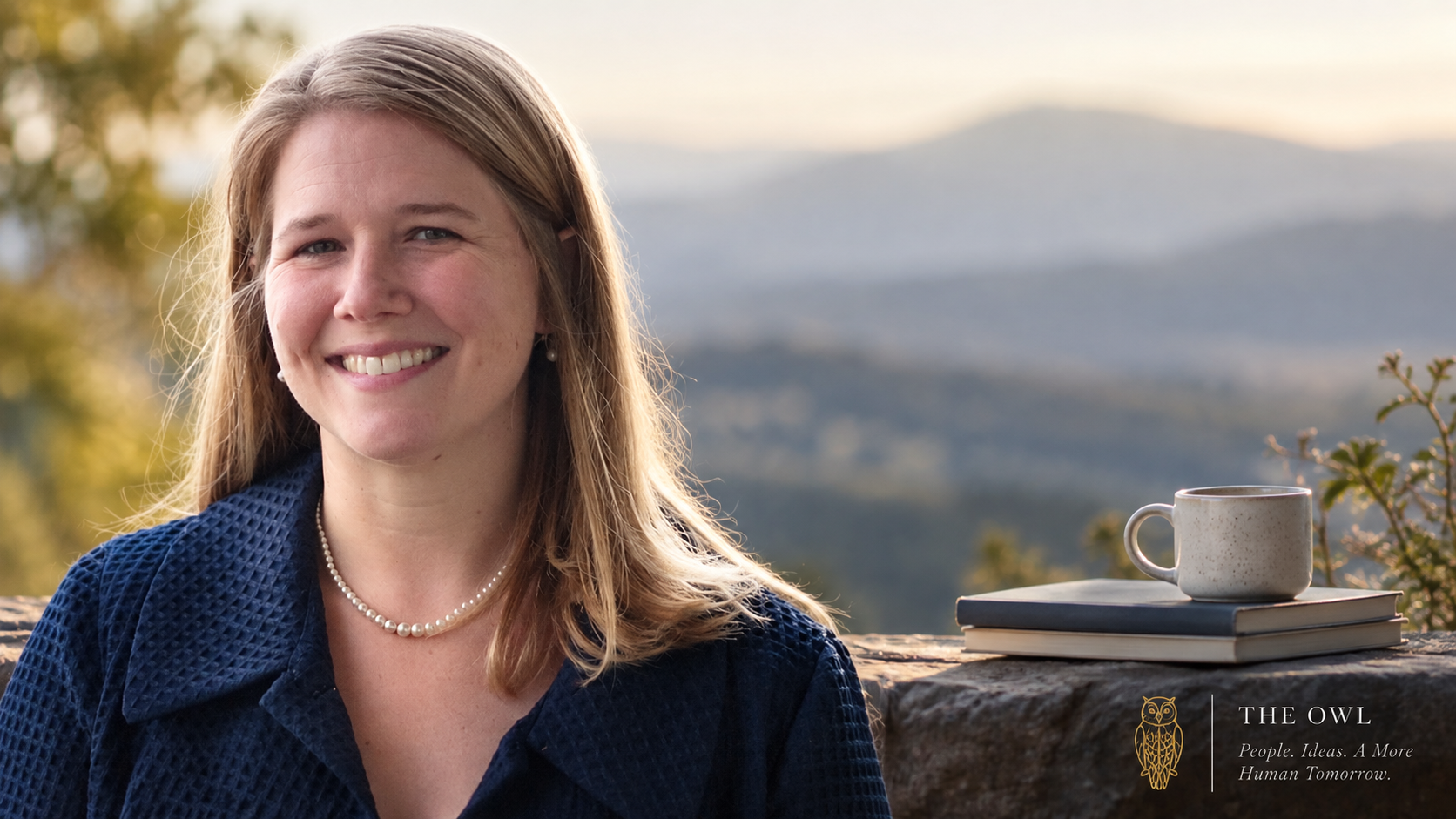
Mark Peres Founder and Executive Director |
|
|
|
Reflections on Rest as Infrastructure
By Patricia Massey Hoke |
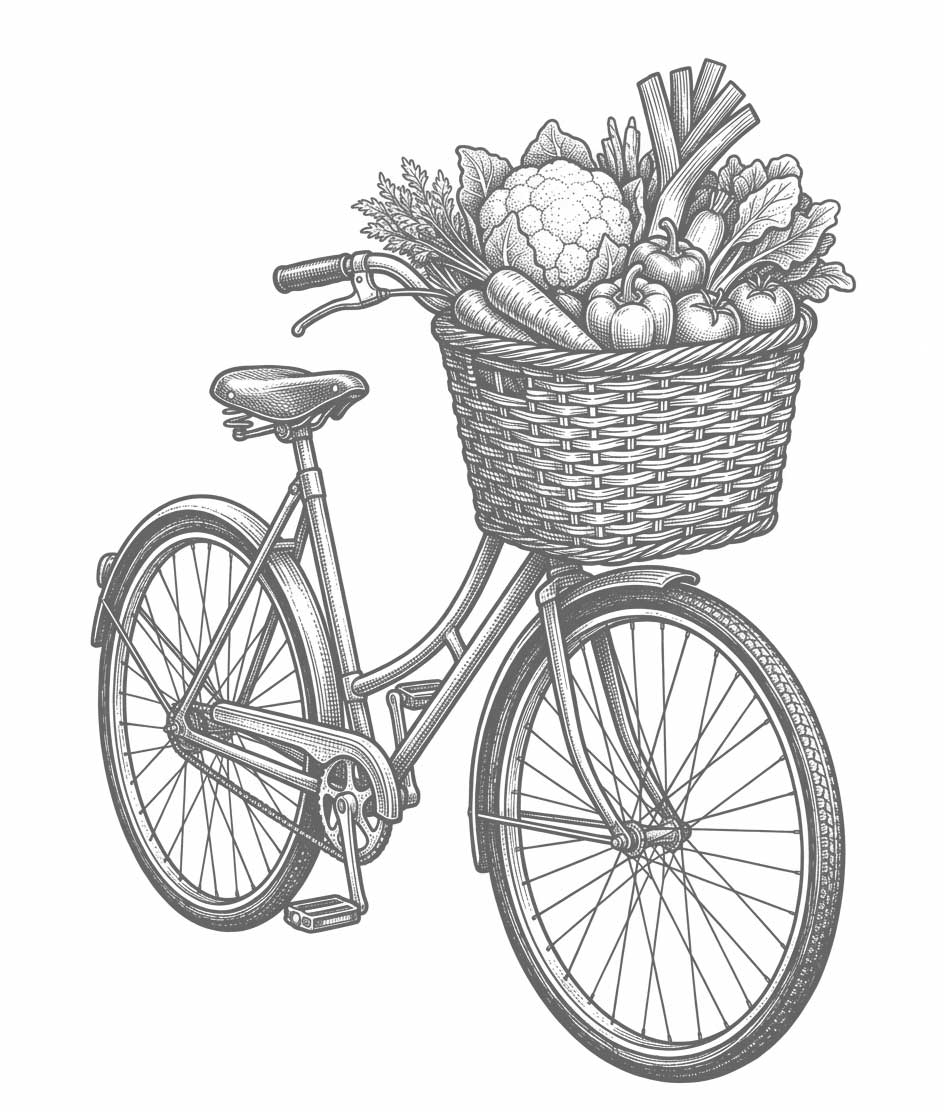
I keep thinking about my late grandmother. When I picture her she is outside caring for her half acre garden, often putting vegetables in her bike basket to deliver to neighbors. She is out there every day; it doesn’t matter the weather or her many community commitments, the garden always calls.
Everyone knew my grandmother for her service, yet when she comes to my mind, she is always in the garden. Recently, I have wondered why. What is the garden telling me?
For twenty years I have worked across corporate offices, government agencies, and nonprofits — most recently as the executive director of a Charlotte-based philanthropic organization. Last year I left that role without a clear next step, but knowing I needed to rest and reset. And I did. Through reading, reflecting, and listening to others I began to discern a new call to provide safe, caring spaces for the often lonely work of nonprofit leadership, and to speak up about the gaps I see. I needed that dormant season to discern my new path. A garden doesn't flourish without a period of dormancy and, I've come to believe, neither do we.
Yet most leaders never get that season. The people leading our community’s most essential work — feeding, housing, healing, educating, advocating — are exhausted and at risk of burnout or well past it. More concerning, I fear we have collectively decided that this is simply the cost of caring.
I know leaders who haven’t taken a vacation in years, who put off critical medical care because they feel like they can’t step away, whose children ask them if their work is more important than they are, who answer emails at all hours of the night. The leaders who take these roles are not the type to back down from a critical need.
However, we have mistaken depletion for dedication. We praise the leaders who make such sacrifices. We call it commitment, but really it is erosion of the very judgment, creativity, and moral imagination these roles most require. We treat the problems these leaders are trying to solve as more important than the human beings themselves.
This year in a national study, close to half of nonprofit leaders describe burnout as a serious concern — nearly double the year before. A local 2024 survey confirms this reality, and indicates three-quarters of leaders would benefit from well-being tools. This is not a series of personal failings multiplied across a workforce. These are structural signals of foundational issues and it is time to pay attention.
Educator and writer Parker Palmer has a phrase for the difficult space these leaders occupy. He calls it the tragic gap. Palmer writes, "On one side of that gap are the harsh and discouraging realities around us. On the other side is the better world we know to be possible." It is a particular call and professional choice to stand in this gap. And a leader’s hardest task isn’t necessarily closing the gap, but rather learning to stand inside the gap without being consumed by it.
Which brings me back to my grandmother in her garden. As I reflect I can see that her garden was what kept her from being consumed by the challenges of the world or the endless tasks she had before her. Gardening allowed her to rest. It gave her a reverence for the natural world that fed her inner resilience, and gave her resolve to further support her community – quite literally, through sharing homegrown vegetables. Gardening was part of her way of being, her infrastructure if you will, it wasn’t optional or occasional.
This, I think, is what the garden has been telling me. My grandmother's garden wasn’t a retreat from her service; it was where her service grew. The hours she protected for herself each day were the same hours that filled her basket for others.
So I wonder what it would take for all of us who care about change work – leaders, boards, funders, neighbors – to treat rest not as a reward for a job well done, but as infrastructure: as essential to the work as payroll or a strategic plan.
When I picture my grandmother now, I see her pedaling down the road with a bike basket full of vegetables, on her way to visit neighbors. She tended the garden, and the garden tended her. And there was plenty to share. |
Patricia Massey Hoke is founder and principal advisor at Thunder Hill Advisors, which provides support to executives leading social change. |
|
| |
What power do we actually have over ourselves?
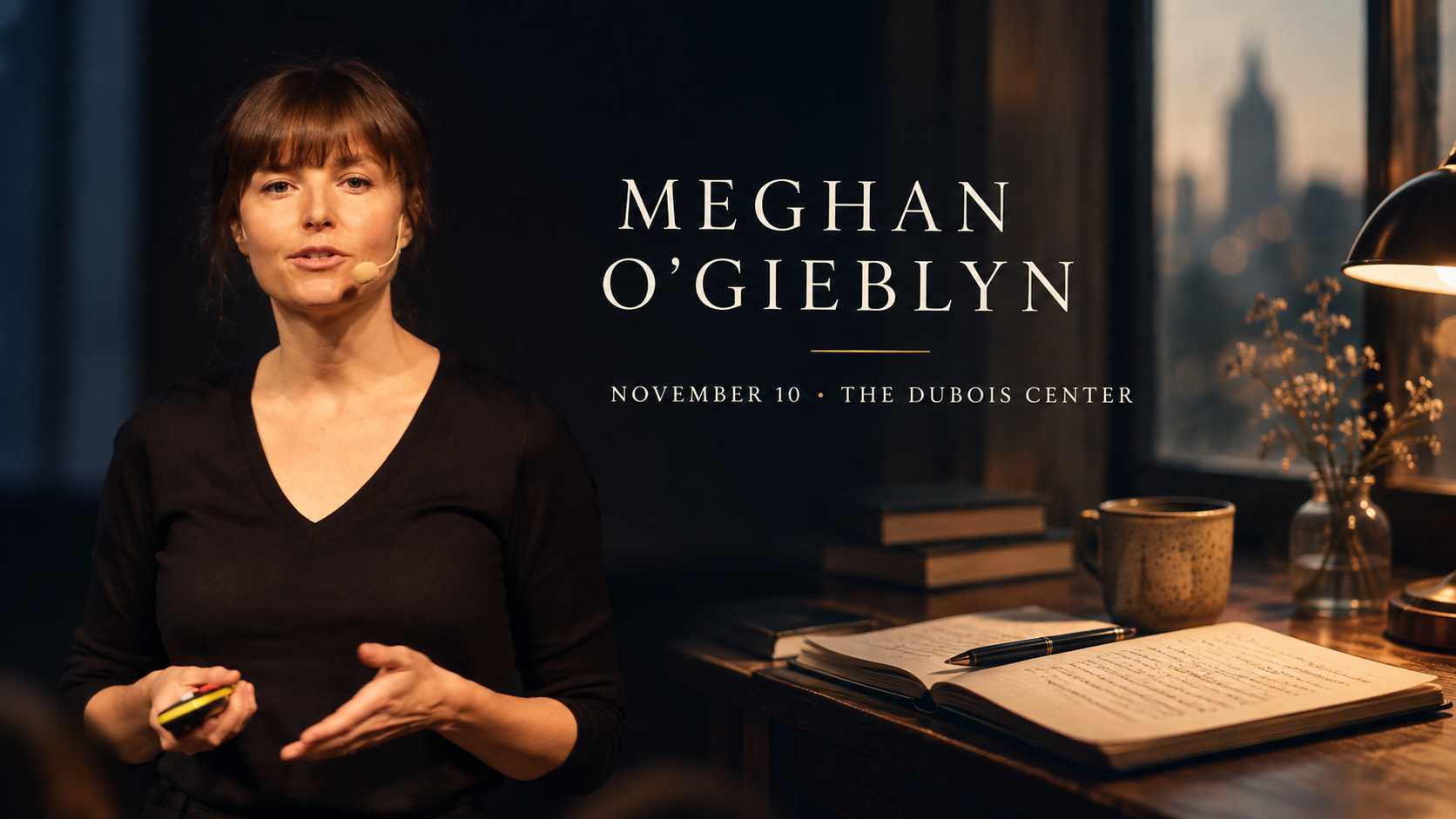
On November 10, acclaimed essayist Meghan O’Gieblyn joins us at The Dubois Center for a conversation about one of the oldest human struggles: the distance between the person we intend to be and the person we sometimes become.
Her new memoir, Will and Attention, begins in deeply personal territory—faith, addiction, relapse, recovery, and the difficult work of change—and opens onto larger questions about free will, attention, consciousness, technology, and what it means to live a good life. O’Gieblyn, author of God | Human | Animal | Machine, brings these questions into conversation with the technological world she has spent years examining, including artificial intelligence and the increasingly blurred boundary between human and machine.
It’s precisely the kind of territory we love exploring at The Charlotte Center: personal enough to matter, philosophical enough to linger, and very much of this moment.
Join us Tuesday, November 10, at The Dubois Center at UNC Charlotte Center City. Doors open at 6:00 PM; the Forum runs from 6:30–8:00 PM, with conversation moderated by Jessica Parker, Ed.D., co-host of Women Talkin’ ’Bout AI. |
|
|
|
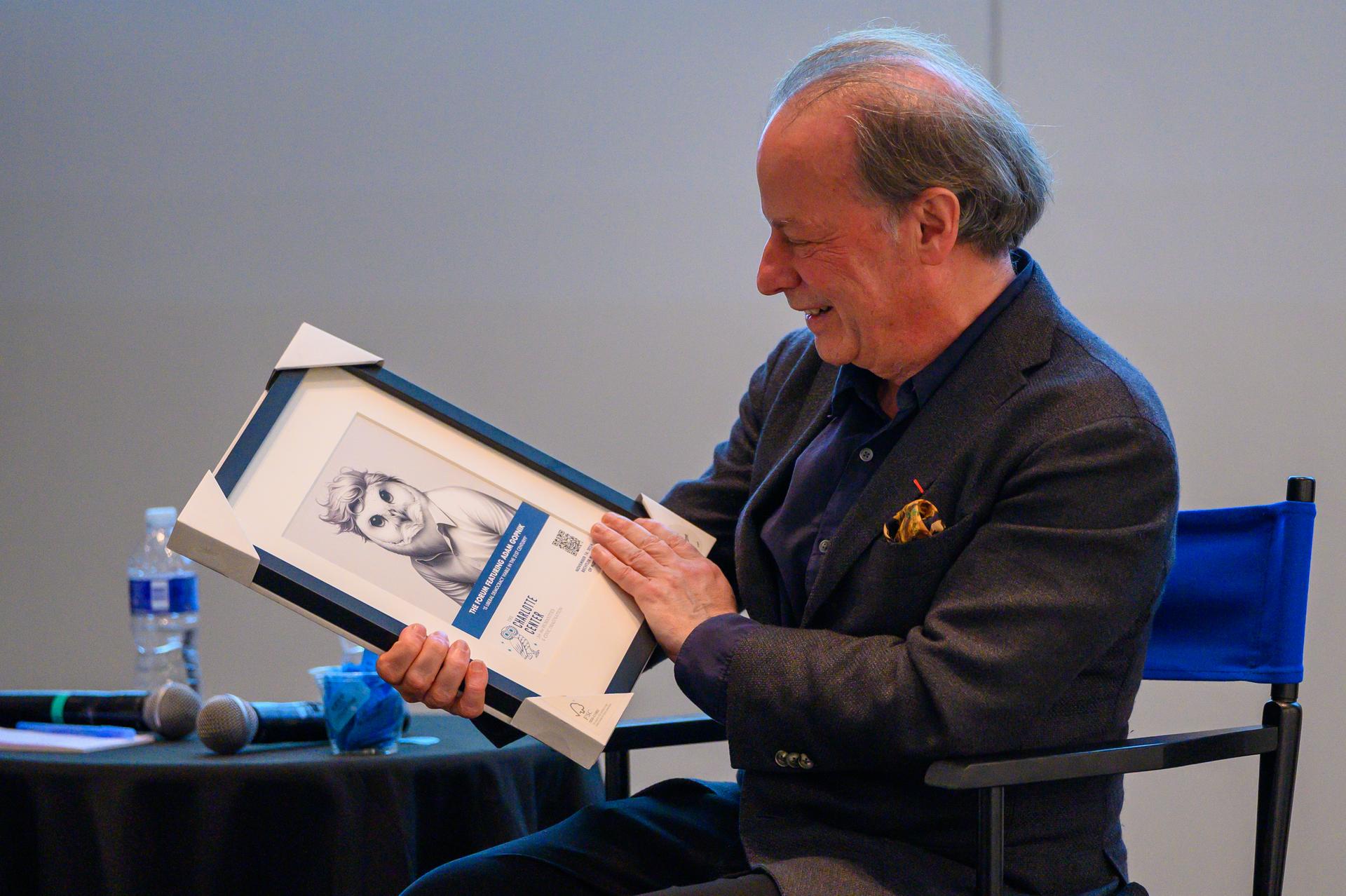
Four days after the 2024 presidential election, Adam Gopnik came to Charlotte.
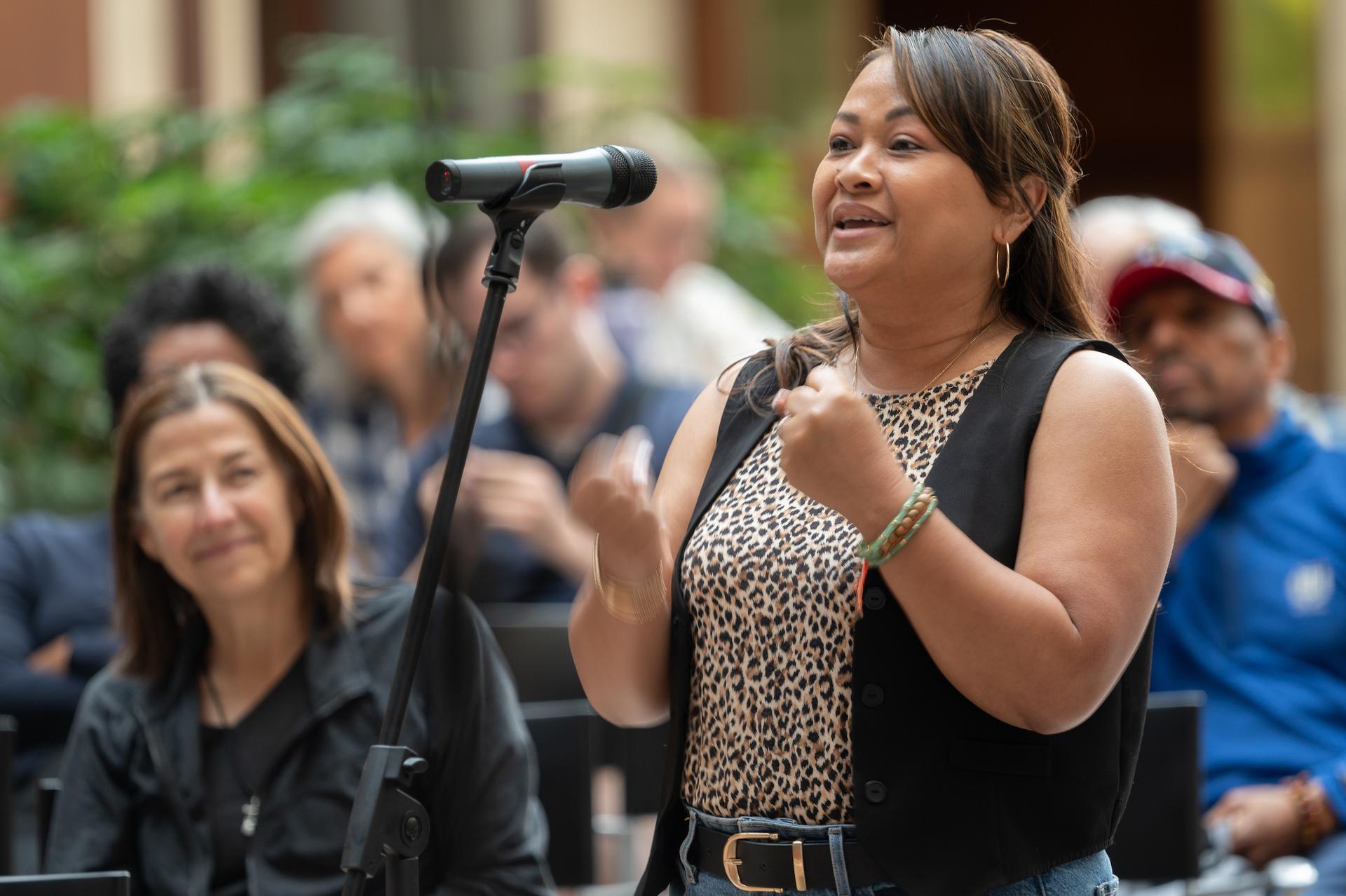
The longtime New Yorker writer joined us at the Bechtler Museum of Modern Art with a question that suddenly felt anything but academic: Is liberal democracy viable in the 21st century? Over the course of the evening, Gopnik brought his characteristic wit and historical perspective to questions about how America had arrived at that moment, the tensions between hope and skepticism, and what sustaining a democratic culture asks of its citizens. It was also a reminder of something we believe about public conversation. The Forum wasn't designed simply for an audience to hear from Adam. Participants talked with one another, wrestled with the questions he raised, and joined the conversation themselves. Ideas became an occasion for people to gather.
Nearly two years later, the questions from that evening haven't gone away. That seems reason enough to revisit the conversation, and perhaps ask what we see differently now. |
|
|
|
what falls to the ground
By Lucinda Trew |
it is the simplest of truths, really
all that rises, falls Newton's apple to the head the scissor-snip of marionette thread
meteors and acorns, single-engine planes, airmen tumbling onto Dover sand, gravity is when grace nose-dives the consequence of spacetime
curling up like warped linoleum around water stains and heavy tread it is satellite debris spiraling in orbit glowing butts flicked from car windows
leaving a trail of sparks speeding through dark, it is the wisp of dandelion thread drifting skyward with seed and breath
held in a wish, a buoyant odds-defying prayer that what falls to ground rises, and that even weeds have wings
|
Lucinda Trew is a is a poet, essayist, and author of the collection ‘What Falls to Ground.’ |
|
|
|
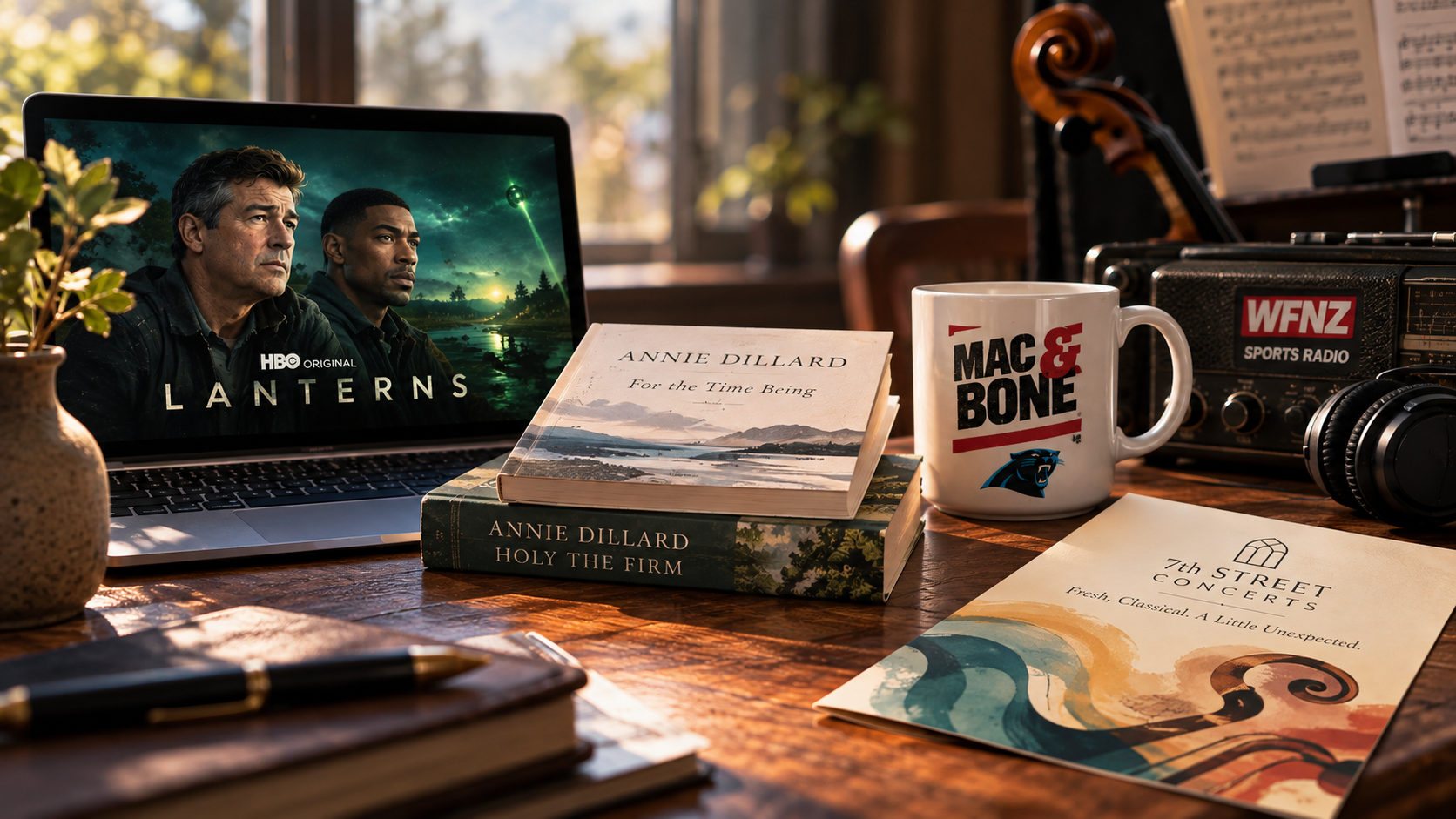
Here's a few attention-grabbing, life-filling things:
Lanterns is an HBO series about the Green Lantern Corps starring Kyle Chandler and Aaron Pierre that is the best show on television. Well, it is if you are drawn to a true crime-ish, noir-ish, superhero murder mystery with blistering good dialog and intense acting that is somehow just perfectly fun. (Yes, I have a comic book collection.)
Annie Dillard's Subject Was the Whole World - Robert P. Baird, close associate of Dillard, shares an intimate reflection of Dillard and her writing. The first work of hers that I read was For the Time Being, a collection of essays about the "terrifying grandeur of all that remains tantalizingly and troublingly beyond our understanding" that stopped me in my tracks. Dillard took on the ineffable: life, death, time, existence, meaning. All the things that have become my own metronome. Next to re-read, her prose poem masterpiece: Holy the Firm.
Mac & Bone - I don't know why I listen to these guys every morning on WFNZ, but they genuinely love football and are sufficiently goofy about the Carolina Panthers that I'm drawn in. Fandom is caring. I've been caring since Third Grade. Count me in.
7th Street Concerts - Fresh, Classical. A Little Unexpected. That's as good and descriptive a tagline as could be for this delightfully-inspired and uplifting concert series that also sends musicians into the community—to hospitals, shelters, schools and more. Led by oboist Kristin Olson, and now in its fourth year, 7th Street concerts presents intimate, story-filled, music experiences in St. Peter's Episcopal Church. Next up: Murder, Music & Caravaggio. What could be better?
|
|
|
|
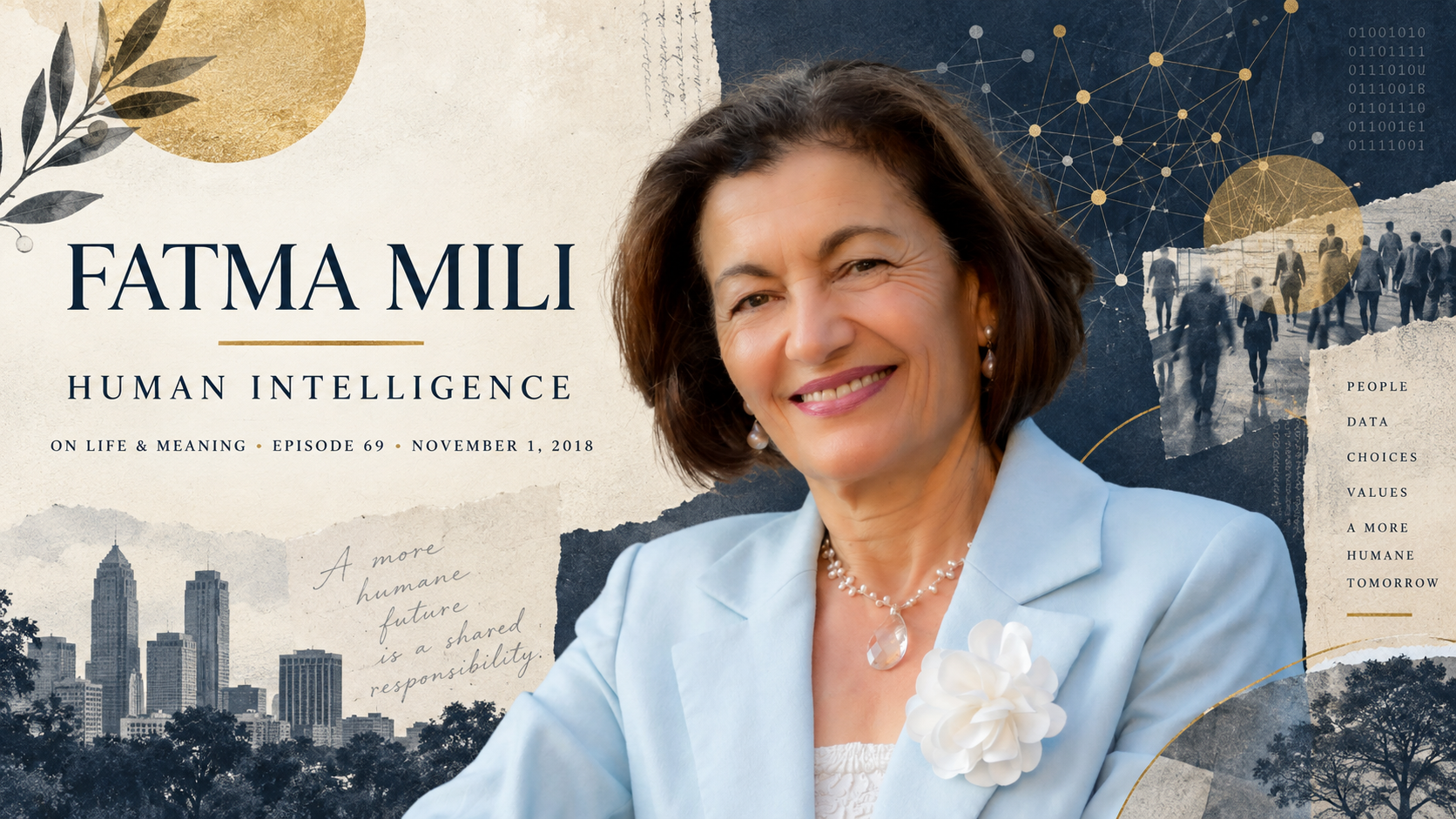
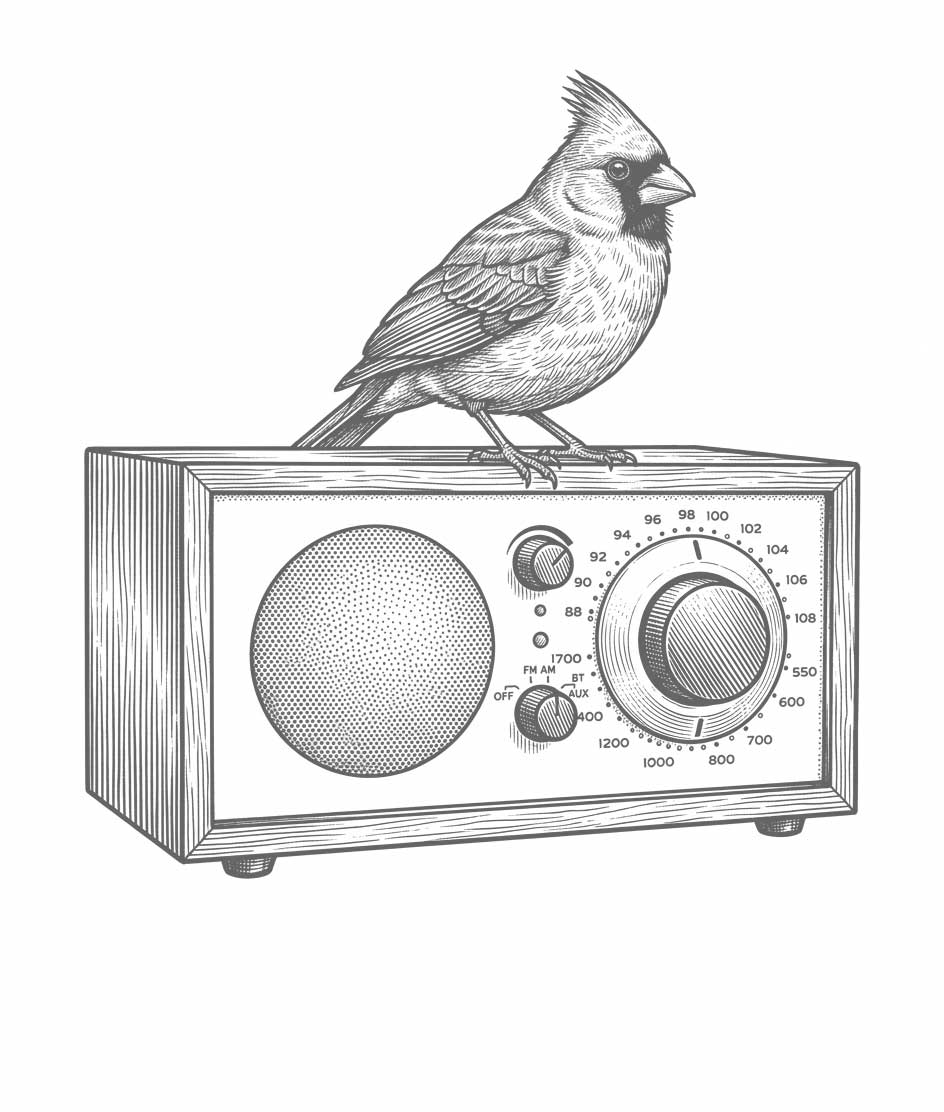
Every month in The Owl, we will bring you a conversation from the archive. This one feels less like looking back than catching up.
In November 2018, I sat down with computer scientist Fatma Mili, then dean of UNC Charlotte’s College of Computing and Informatics, for an On Life & Meaning conversation we called “Human Intelligence.” We talked about artificial intelligence and machine learning, the biases we build into computer systems, the transfer of human decision-making to algorithms, the growing power of what Fatma called the “data industrial complex,” and the values that should guide what we choose to build.
Nearly eight years later, amid calls to pace the frontier of AI, the conversation feels remarkably current. Fatma—now Interim Provost and Senior Vice President for Academic Affairs at Montclair State University—was already asking the question beneath so much of today’s debate: not simply what can our technologies do?, but what values should guide whether we do what we are capable of doing? It’s a conversation about technology, certainly, but even more about judgment, responsibility, and the kind of humane future worth having. | |
|
|
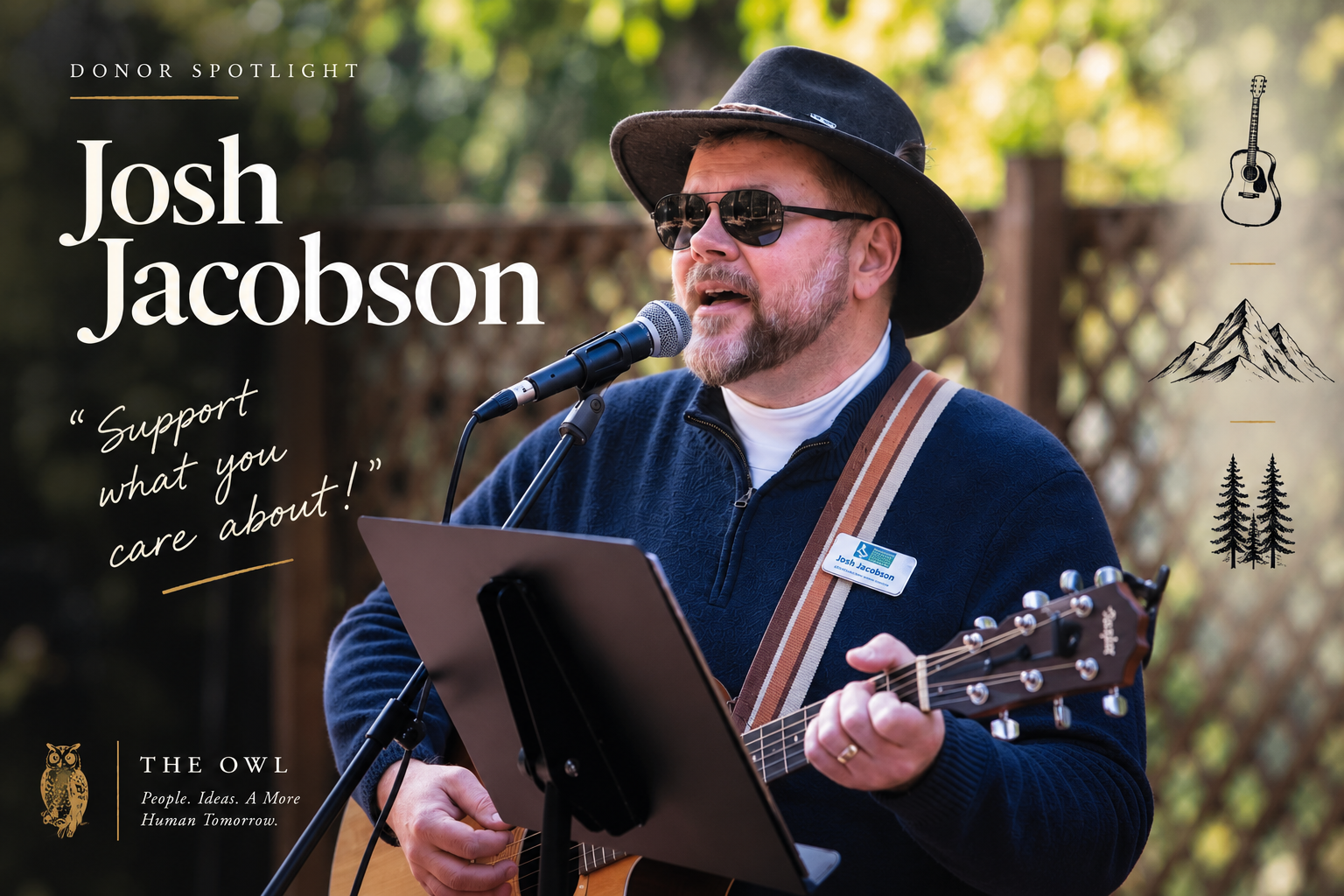
Josh Jacobson is one of the great good people of Charlotte. Josh spends much of his life thinking about how people and organizations can accomplish more together. He leads Next Stage, a Charlotte social innovation company that works with nonprofits, businesses, government agencies, philanthropies, faith institutions, and community organizations to design solutions that amplify their impact.
That instinct carries over rather wonderfully into the rest of his life. He is lead singer and rhythm guitarist for No Whammies!, a party band that plays exclusively to raise money for local nonprofits. The photograph above catches him at Birds & Brews, a fundraiser for Carolina Raptor Center.
He and his wife, Adara, are also making their way through the National Parks—Zion and the Narrows this year, the Grand Tetons next—and Josh recently traveled to Decorah, Iowa, to reconnect with his Norwegian roots and visit his family’s ancestral farm. Josh and Adara shared their reasons for supporting The Charlotte Center:
"My wife and I support The Charlotte Center because it creates something every growing city needs: space for curiosity, reflection and meaningful connection. The Forum series is always thought-provoking, with the sort of speakers that we value: big-idea people, writers, artists and changemakers. It's an organization helping make the Queen City a more thoughtful and interesting place to live. Supporting it philanthropically just makes sense to us. Support what you care about!”
That last sentence strikes us as pretty good advice. We’re fortunate that Josh and Adara count The Charlotte Center among the things they care about! |
|
|
|
A good gathering needs more than an audience.
It needs people willing to listen, ask a question, offer a different perspective, and stay curious about what someone else has to say. That exchange is at the heart of The Charlotte Center. We create the room. You help make it a community. If you believe Charlotte needs more spaces like this, help us keep creating them. |
|
|
|
This semester, I’m teaching an Honors Ethics seminar that is attempting something mildly ridiculous: surveying several thousand years of Western thought in a matter of weeks.
We began with Mesopotamian epic tales and have been making our way through the Greeks, Christianity, the Enlightenment, modernity, and eventually French post-structuralism. It’s a long procession of human beings asking essentially the same questions in increasingly complicated ways: Who are we? How should we live? What can we know? What do we owe one another? Meanwhile, in my home gym, I tore my meniscus. There is something clarifying about considering the sweep of Western civilization while limping up the stairs. The mind likes abstraction. It can travel from Gilgamesh to Aristotle to Kant to Foucault before lunch. The body is less impressed. It reminds us that we are animals with cartilage. That time isn't merely an idea. That aging isn't something happening philosophically.
For all our magnificent thinking about what it means to be human, we do our thinking in bodies: bodies that strengthen and weaken, heal and hurt, carry us into rooms and eventually require us to sit some things out. Perhaps that's part of the curriculum too. The knee is improving. The seminar marches on. Foucault awaits.
--- Let us know what you think about this third issue. Reach us at thecharlottecenter@gmail.com. |
|
|
|
Thank you to all of our generous donors and sponsors that make our work possible. |
Never miss an email from The Charlotte Center! Please add thecharlottecenter@gmail.com to your Safe Senders list. Be sure to check your Spam or Junk folders if you don’t see us in your inbox. |
|
|
|
| The Charlotte Center is a non-profit 501(c)3 organization. |
|
|
|
|